01
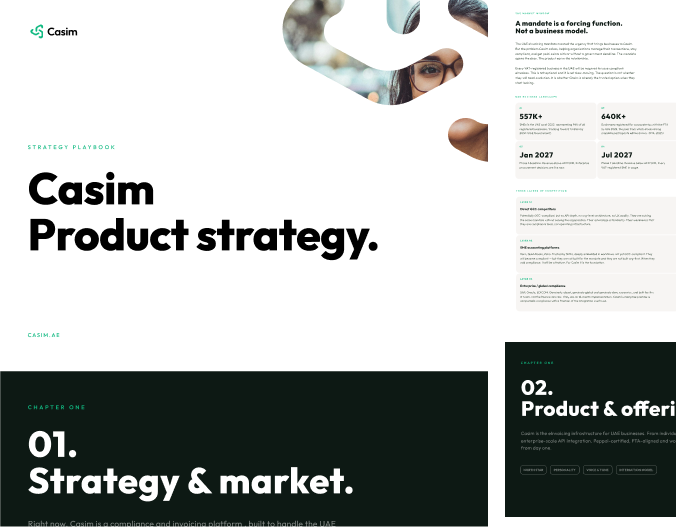
One definition replaced three competing versions of the company.
The product definition aligned leadership, product and engineering around the same users, problems, surfaces and twelve-month direction.


Casim · Founding design leader · 0 to 1
"We wouldn't be where we are today without Luke and the work he did to shape the product and direction."
Stuart McKechnie - CEO & Founder, Casim
The market
Every competitor made the deadline the product. I positioned Casim around what businesses actually wanted after it: control, assurance and a way through the complexity.
New regulation was mandating e-invoicing across the region, and every provider in the market ran the same playbook: a six-month implementation with no firm end date.
The commercial model put the risk and the anxiety onto the customer. Non-compliance, lost earnings, fines, sold as urgency rather than solved as a problem.
Casim needed to compete on something else entirely: assurance rather than fear, a system that took on the complexity instead of billing for the time spent explaining it.
The starting point
There was no product definition, brand position, research foundation or shared system. Just a handful of solutions and pressure to keep shipping.
The ambition was broad, but undefined. Solutions existed in different corners of the company, and leadership, product and engineering were each working from different assumptions about what Casim was.
I mapped the market across 150+ competitors, spoke directly to business owners and finance teams, and tested early concepts before committing the org to a plan.
Before choosing what to build next, I needed to establish what Casim actually was.
The reset
I paused execution, brought the founding team into discovery, and turned user evidence into a product thesis the whole company could defend.
Pausing execution at an early-stage startup isn't popular, and I had to make the case for it - as an organisation-wide decision, not a product-team one. I drove the research, direction and brand position end to end.
1. Understand the market
Competitor mapping, stakeholder workshops and positioning.
150+ providers mapped across three layers of the market.
Structured discovery sessions with the whole founding team, not just product.
2. Understand the work
Interviews, journey mapping and affinity analysis.
Targeted around the roles closest to the invoice: finance, ops, ownership.
Direct conversations with business owners and finance teams.
Patterns pulled out of raw interview data before any solutioning began.
Research and market data run through AI to surface patterns faster than manual review.
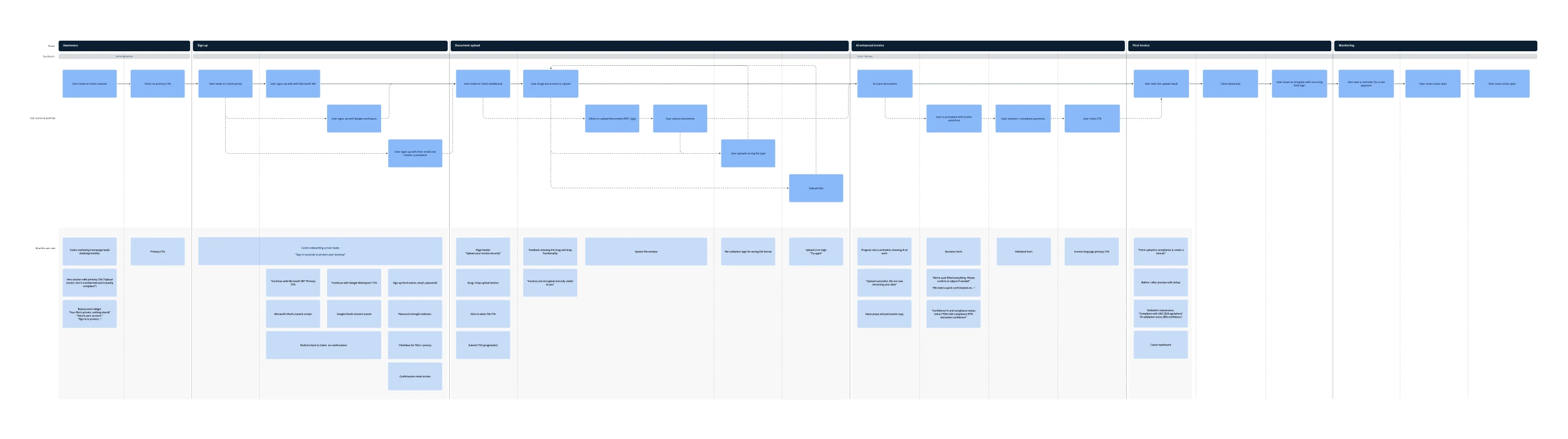
The end-to-end experience mapped before a single screen was designed.
3. Test a new direction
Product models, concepts and brand positioning.
First directional concepts, tested and discarded before committing the org.
Early exploration of how Casim should sound and feel against the market.
Research insights
Across a single 76-minute interview, the participant repeatedly described workarounds, bottlenecks and reliance on memory.
01
The real work was dependency management.
Inputs were scattered across people, systems and teams. Creating the invoice was only the final step.
02
Reputational risk mattered more than financial risk.
People were less afraid of losing money than of looking unreliable in front of a customer or regulator.
03
Every role was asking for the same thing: control.
Different jobs produced different workflows, but the underlying need was visibility, continuity and confidence.
Product judgement
The system had to anticipate, resolve and explain the work before the user ever had to ask. That's where Casim stopped being compliance software: it became an operational safety net.
It had to act before risk became failure - flagging missing inputs, delays and continuity risks before they hit delivery. And it kept the human in control: decisions stayed visible, explainable and correctable.
"I want independence from bottlenecks and a
Rodessa C., research participant
monitoring view, to avoid relying on memory."
"I want invoicing to run automatically and accurately without relying on other teams, so I can send on time."
Razel G., research participant

AI-native by design
It planned, monitored, adapted and escalated: agentic behaviour, not automation bolted on after the fact. The interface only surfaced the moments that required human judgement.
When issues arise the system builds a plan shaped by the situation and how that customer has behaved before. Communication is simpler, actions are upfront and intuitive.
Recommendations stayed visible rather than automatic. The system could act, but a person could always see why, and correct it.
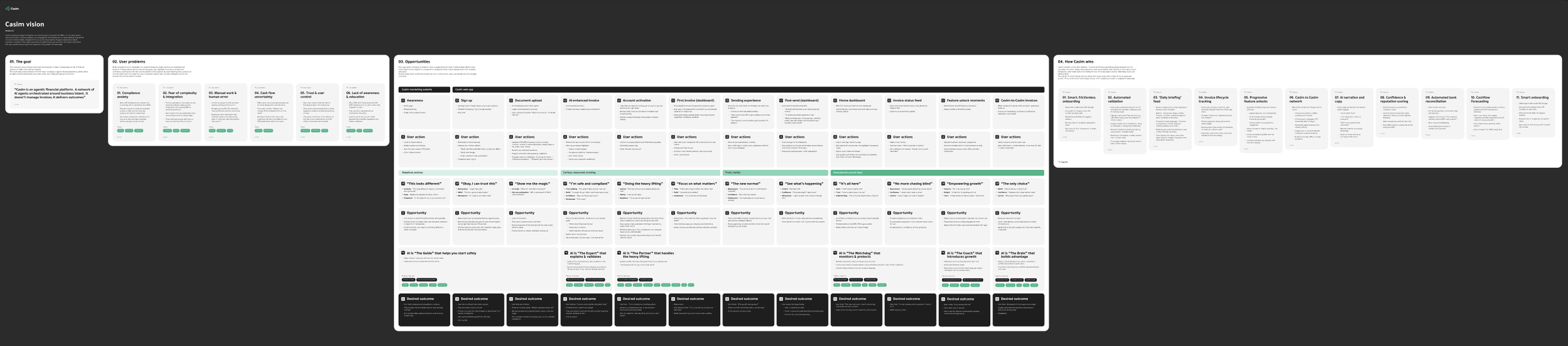
Research synthesis, market mapping, prototyping and the design system all used AI from the beginning, rather than adding automation after the design was complete.
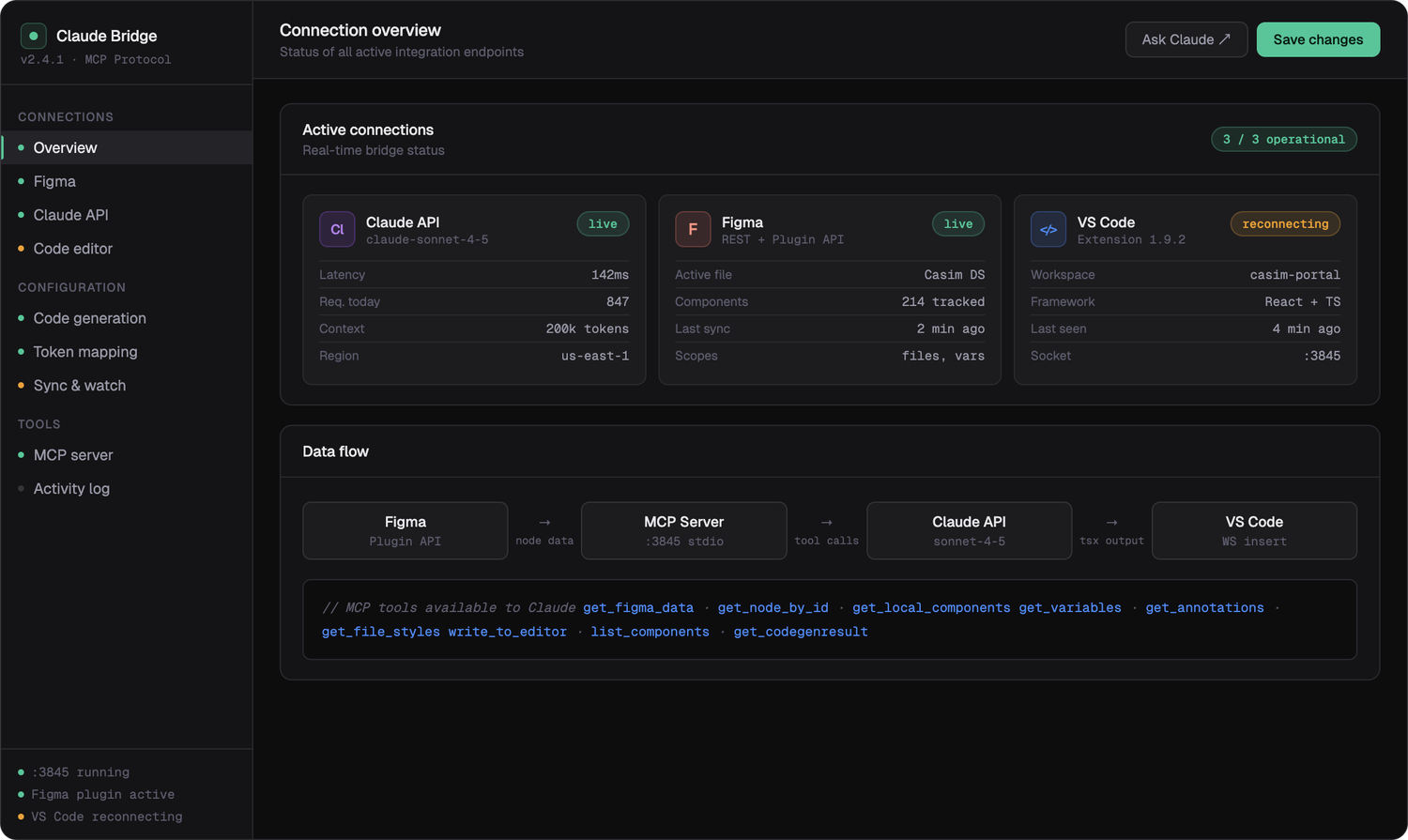
None of this ran on a traditional design process. Research synthesis, market mapping and brand content all leaned on AI. Components, documentation and production assets moved from Figma through Claude straight into the codebase - a pipeline, extending something I'd started at Careem, that cut concept-to-production time from four weeks to five days, with no handoff to lose intent in.
Where it stands today
The enterprise solution is built and shipped, live with the first five enterprise customers who are using it and helping it evolve, alongside a launch partner already secured.
Not everything is finished, and it shouldn't be yet. Prototypes exist for future markets, segments and product evolutions: the next layer of the same thesis, not a departure from it.
The playbook reached further than the product did. The whole organisation adopted it, led from the top by the CEO, not just the teams closest to the build.
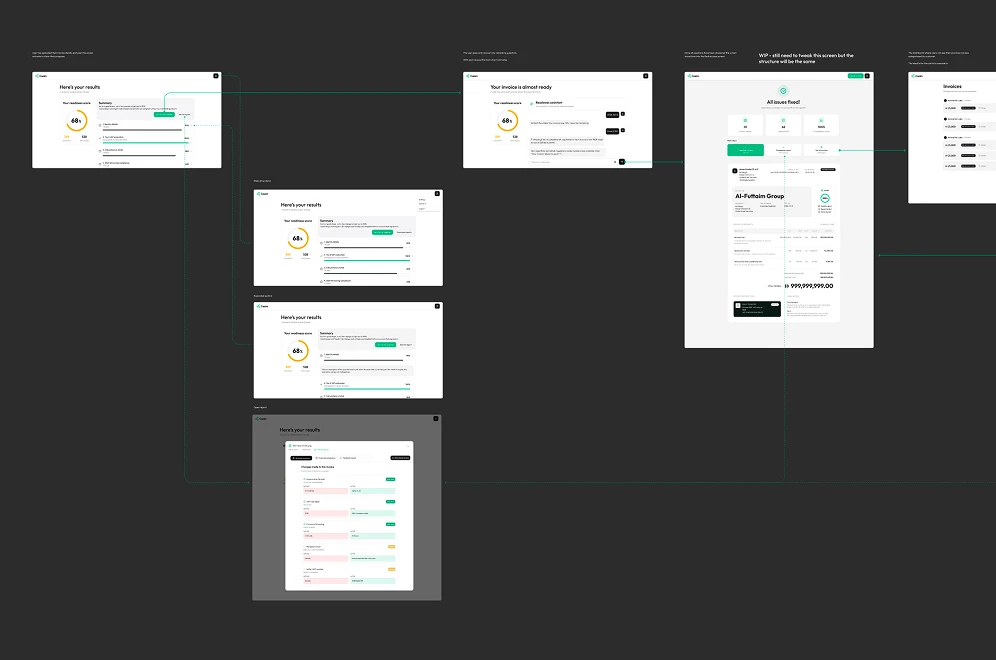
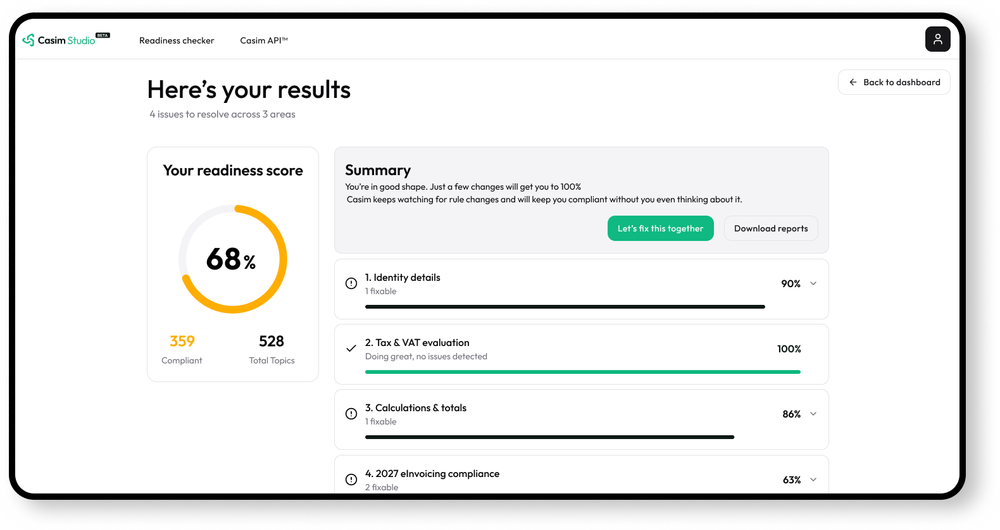
Before the wider product was ready, we shipped a free tool that checks a company's invoices against the upcoming mandate, then uses AI to fix them into a compliant invoice they can download the same day.
That wasn't a roadmap item handed down from above - we made the call to release it early, because the fastest way to define what Casim should be was to put something real in front of the market and build momentum before the mandate did.
From insight to direction
Every major decision traced back to the evidence, from the product model and brand to onboarding, dashboards and the way the team worked.
01
The product definition aligned leadership, product and engineering around the same users, problems, surfaces and twelve-month direction.
02
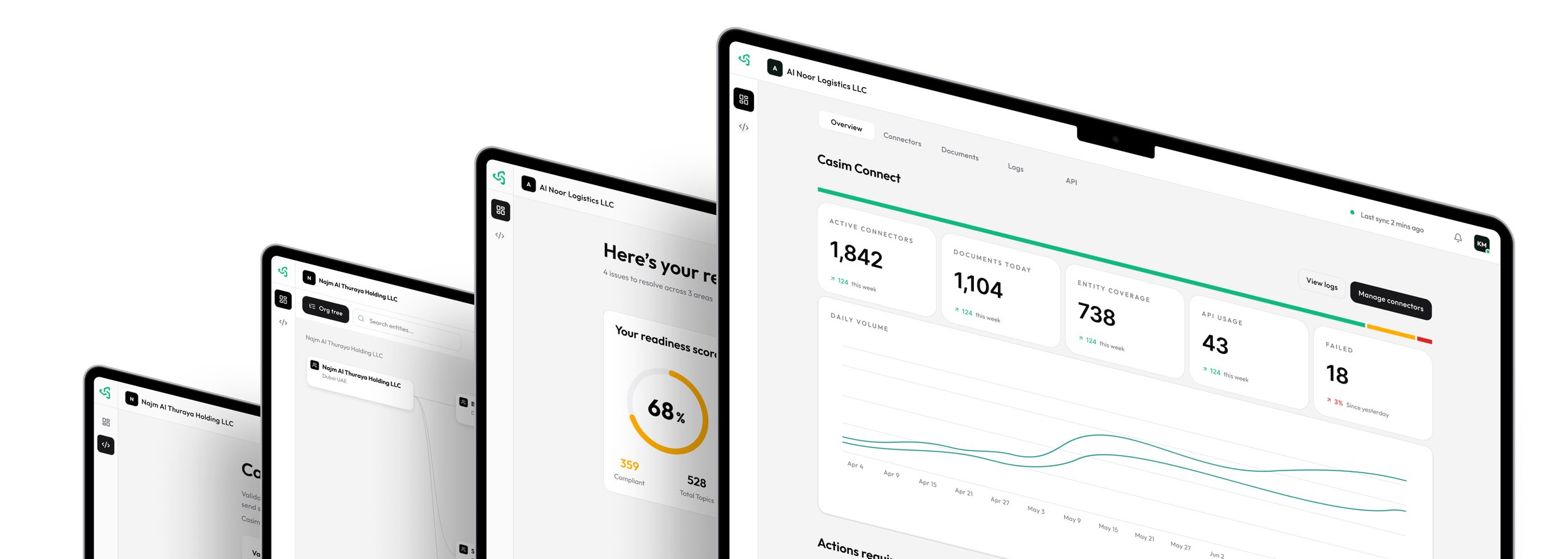
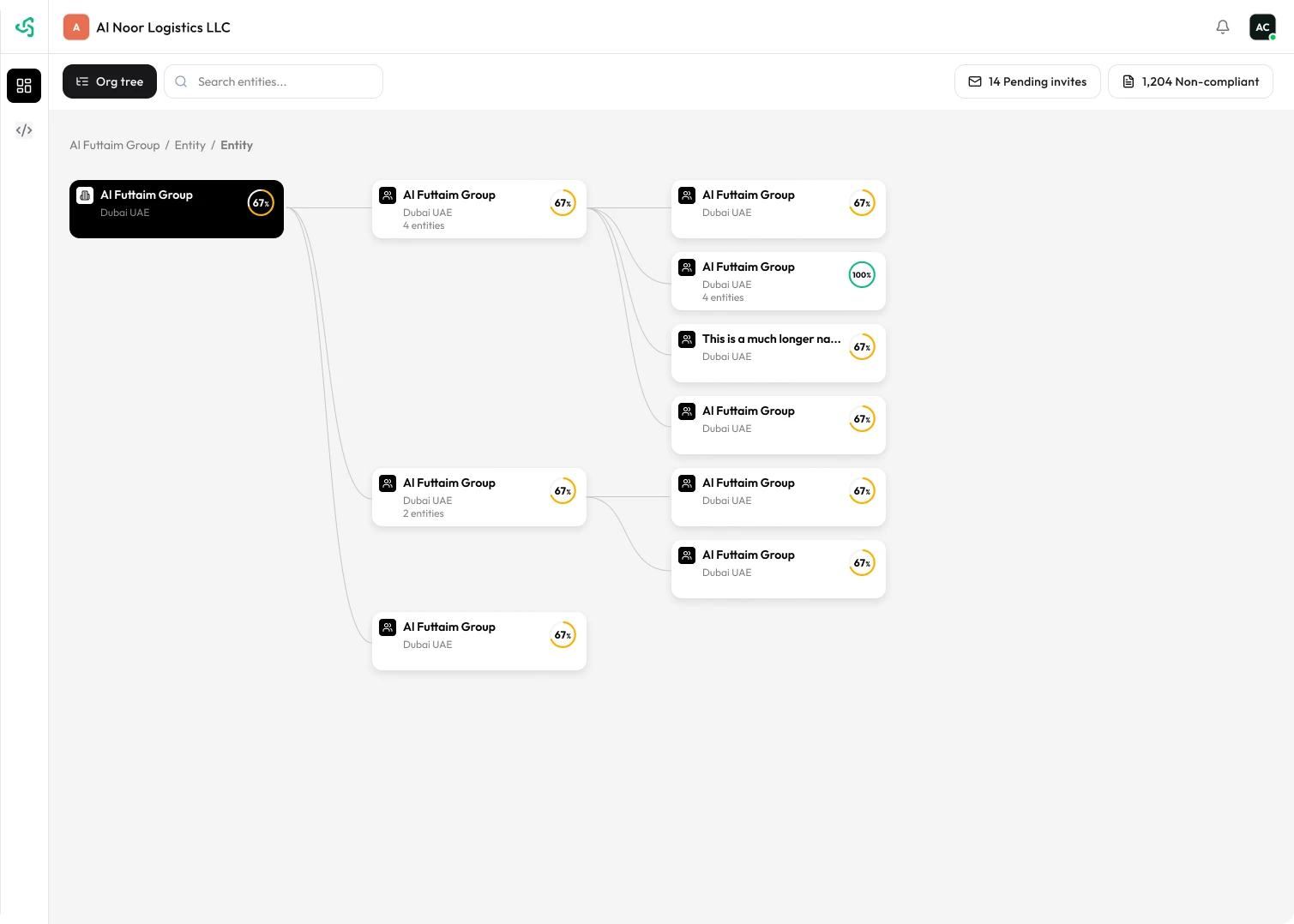
Dependency management shaped three connected surfaces: the API, integrations and a safety-net portal for work that still required human attention.
03
Monitoring views, readiness scores and proactive risk states replaced reliance on memory and scattered follow-up.
04
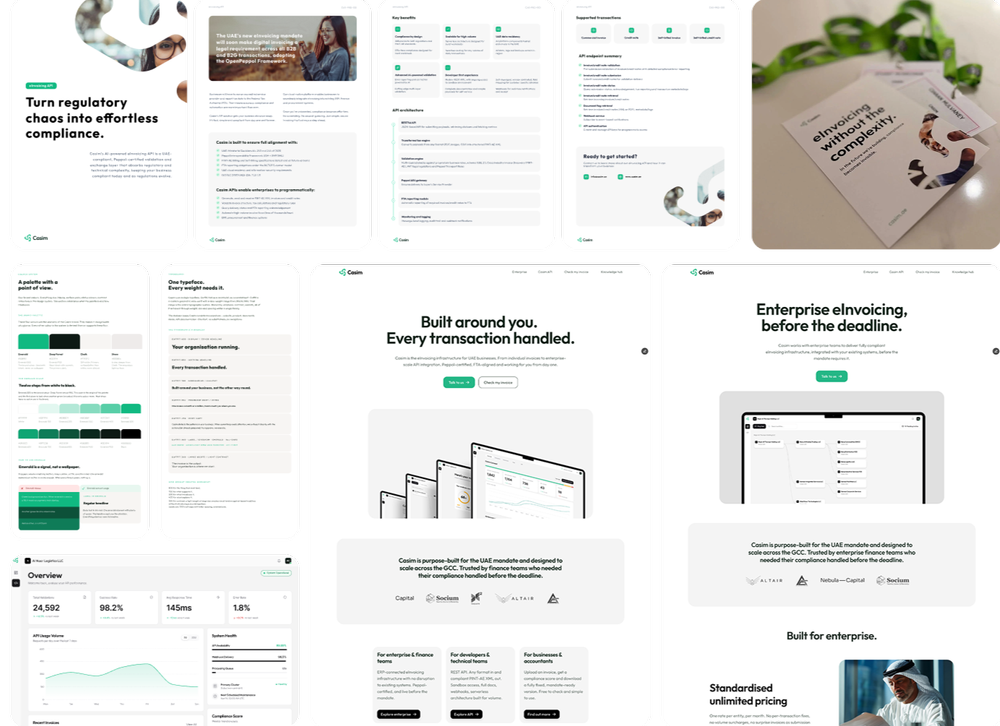
The positioning, identity and product language all reinforced confidence rather than amplifying regulatory anxiety.
05
Instead of a long consulting engagement with an uncertain finish, onboarding became a guided product journey with clear progress and responsibility.
06
Research principles became reusable components, interaction patterns and engineering guidance, reducing the gap between intent and production.
What this taught me
Casim began with ambition but no shared foundation. The most valuable decision wasn't to accelerate delivery - it was pausing long enough to define the product, market position and operating model.
Product judgement meant deciding what the brief should be, connecting research to strategy, and giving the organisation a direction to act on.