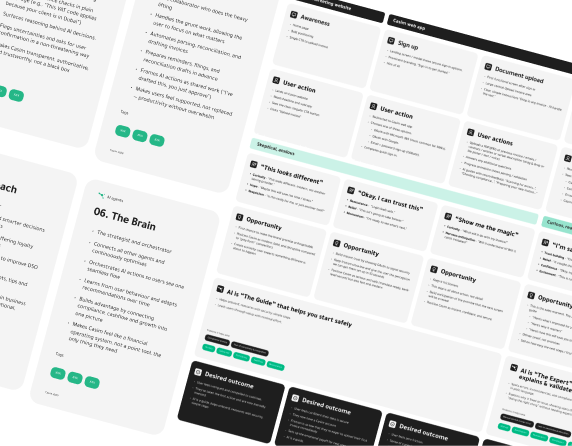
What shaped my work.
I started by designing what people could see. I built a career learning to understand everything behind it.
I began in visual design, asking questions about meaning, use and context. Those questions took me through industrial design, field research, product management, organisational leadership and now AI. Each step widened the problem I felt responsible for.
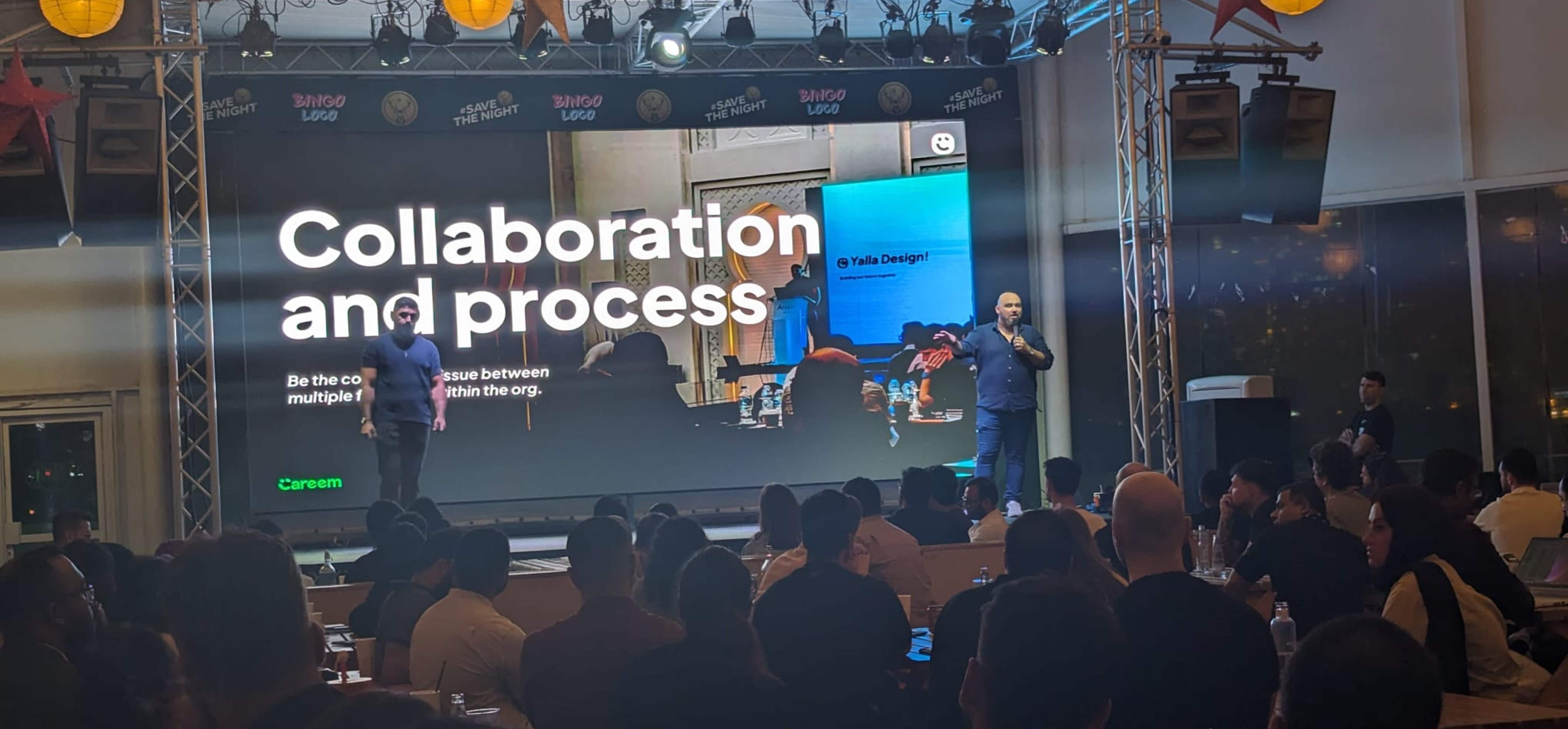
Takeaway
Six things that define
how I work.
Each began as a question, an experience or a responsibility I had to grow into.
Together, they explain the path from visual design into research, product, leadership and AI. They shaped the choices I made, the leader I became and the principles that guide my work today.
01
Follow the problem,
not the discipline.
I began in visual design, but kept following the questions behind the work. What it meant, how it would be used, what shaped it and what the business was trying to achieve.
That curiosity took me through industrial design, research, product management and leadership.
Your job title should not limit the part of the problem you are willing to understand.
02
Go and see how
things really work.
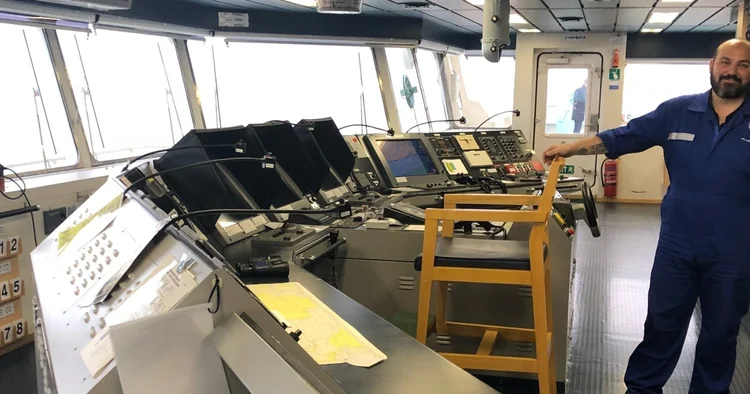
Research taught me that what people say, what organisations believe and what actually happens are often different.
Living on container ships, studying complex telecommunications systems and running eye-tracking studies showed me the value of context.
Do not design for an imagined user. Get close enough to see the behaviour, constraints and workarounds for yourself.
03
Improve the decision
before the output.
Design creates its greatest value before a business commits time, money and people.
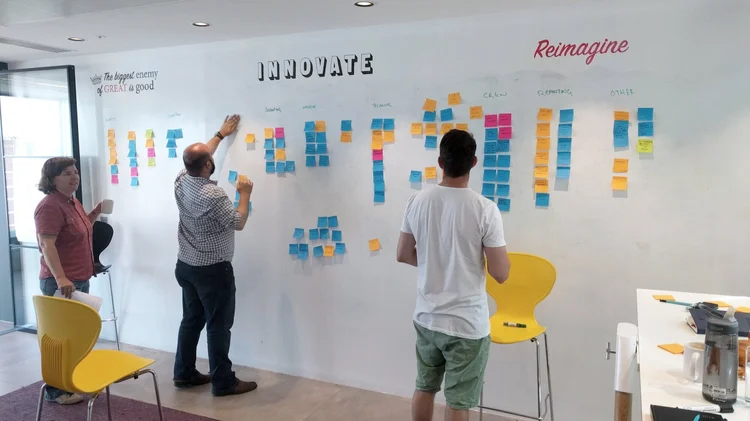
It questions the brief, reduces uncertainty and connects user value with business value. The interface matters, but it is only one expression of the decision behind it.
The more senior the role, the more the work becomes about metrics, money and delivery.
04
Learn the business
before trying to change it.
Design does not operate outside the business. Understand what the organisation values, how it makes money, how delivery works and where decisions are really made.
That does not mean accepting every priority. It means knowing when to align, when to challenge and which battles are worth fighting.
You can only change the business for the better once you understand how it actually moves.

05
Give people the
conditions to succeed.
Leadership is not telling people how to work. It is clarifying the destination, removing obstacles, providing the right tools and connecting people with the support they need.
Good work also needs culture, shared standards and a reason for people to grow.
The goal is to build teams that can think, influence and lead without you.
06
Use AI to sharpen
judgement, not
multiply output.
AI can generate more work, faster. That does not make the work better.
I use it to connect evidence, expose contradictions, challenge assumptions and reduce waste across research, strategy, design and delivery.
The value is not automation for its own sake. It is better judgement at greater scale.